Complete Guide to Real Estate Website Design in 2025
Everything you need to know about creating high-converting real estate websites. Design trends, best practices, and optimization strategies.
Marco Tanner
Real Estate Marketing Expert
Introduction
The real estate industry has undergone a digital transformation, and your website is now the first point of contact for most potential buyers and renters. In 2025, having just any website isn't enough – you need a strategically designed platform that converts visitors into leads.
Key Design Trends for 2025
1. Immersive Visual Experiences
Modern real estate websites are moving beyond static images:
- Virtual tours: 360° walkthroughs that let users explore properties remotely
- Video content: Drone footage, neighborhood tours, and property showcases
- 3D floor plans: Interactive layouts with furniture placement options
- AR integration: Visualize furniture and modifications in real-time
2. Minimalist Elegance
Clean design is not just a trend – it's a necessity for real estate:
- Generous white space: Let properties breathe and stand out
- Typography-first approach: Large, readable fonts with clear hierarchy
- Limited color palettes: Focus on brand colors and let images speak
- Subtle animations: Smooth transitions that enhance without distracting
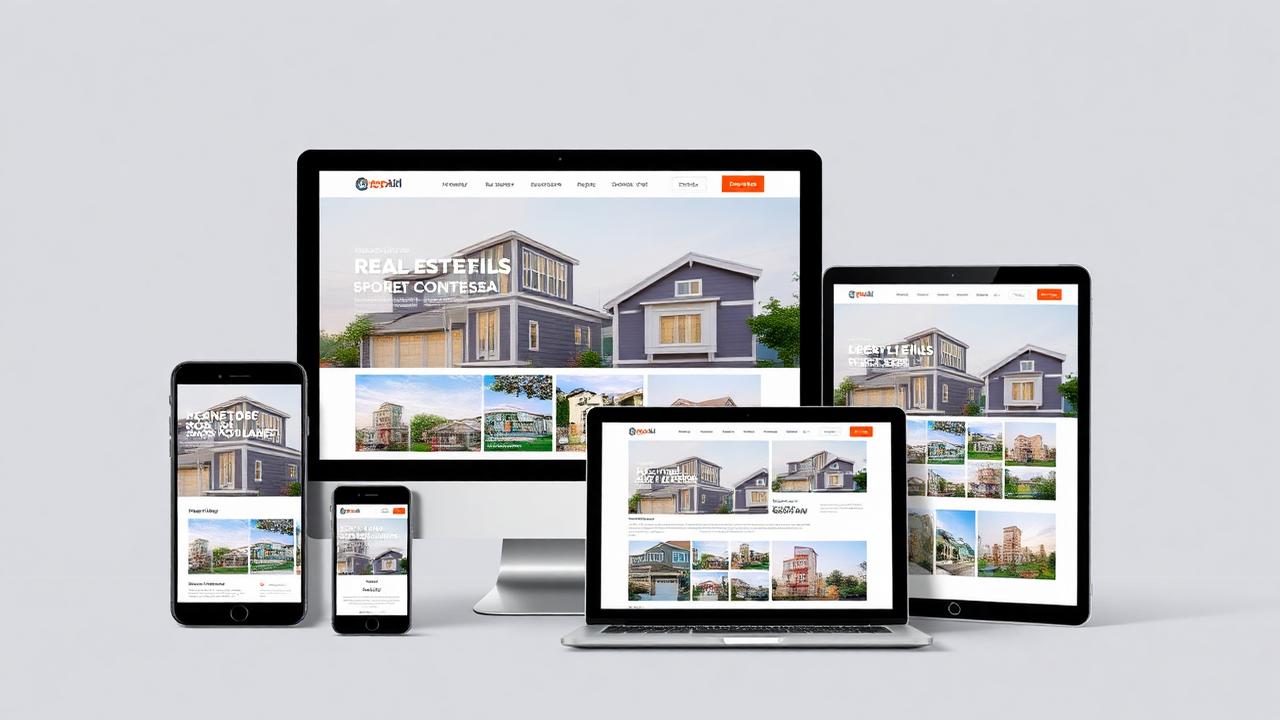
3. Mobile-First Everything
With over 70% of property searches starting on mobile:
- Touch-optimized interfaces: Large buttons, swipe galleries
- Fast loading times: Under 3 seconds on 4G connections
- Simplified navigation: Easy access to key information
- Click-to-call functionality: One-tap contact options
Essential Features for High-Converting Real Estate Websites
Property Listings
- Advanced search and filter options
- Map-based property search
- Favorites and comparison features
- Real-time availability updates
Lead Capture
- Strategically placed contact forms
- Property inquiry forms with pre-filled data
- Chat widgets for immediate engagement
- Newsletter signup for market updates
Trust Building
- Client testimonials and reviews
- Agent profiles with credentials
- Awards and certifications
- Press mentions and media features
Content and SEO
- Blog with market insights
- Neighborhood guides
- Home buying/selling guides
- FAQ sections for common questions
Technical Best Practices
Performance Optimization
Speed is crucial for user experience and SEO:
- Image optimization with WebP format
- Lazy loading for off-screen content
- CDN for global content delivery
- Minimal third-party scripts
SEO Fundamentals
- Schema markup for real estate listings
- Location-based keyword optimization
- Mobile-first indexing compliance
- Fast Core Web Vitals scores
Security and Trust
- SSL certificate (HTTPS)
- Privacy policy compliance (GDPR, CCPA)
- Secure form handling
- Regular backups
Measuring Success
Key metrics to track:
- Bounce rate: Target under 40%
- Time on site: Aim for 3+ minutes
- Contact form completion: Track conversion rates
- Property views: Monitor engagement with listings
Conclusion
A well-designed real estate website is an investment that pays dividends. By following these principles and staying current with design trends, you can create a digital presence that attracts, engages, and converts potential clients.
With platforms like VisionProjects, you can implement all these best practices without any coding knowledge, launching a professional property website in minutes.